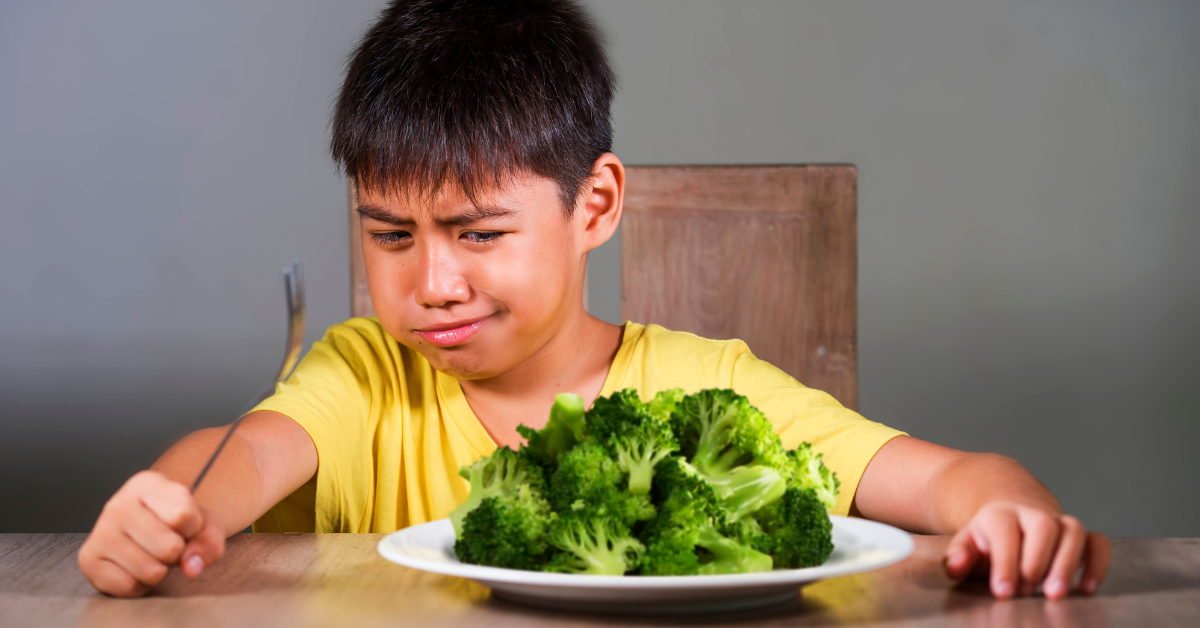
If dinner at your house sometimes turns into a standoff over a single piece of broccoli, you’re in good company. Food refusal is one of the most common challenges of the preschool years. It’s frustrating, but it’s usually a normal stage of development, not a sign that you’re doing something wrong.
Here’s why it happens and what you can do about it.
Why Preschoolers Push Back on Food
Between ages two and five, children are developing a strong sense of independence. Food is one of the few areas where they have real control, and they use it.
Growth also slows after toddlerhood, so appetite naturally drops and becomes less predictable. A child who ate everything at 18 months may seem to live on air at 3½. Many young children are also wary of new foods, especially bitter ones like leafy greens. This caution is common and tends to ease with repeated exposure.
1. Keep Offering, Without Pressure
Children often need to see a new food many times, sometimes a dozen or more, before they’ll try it. A refusal today doesn’t mean a refusal forever.
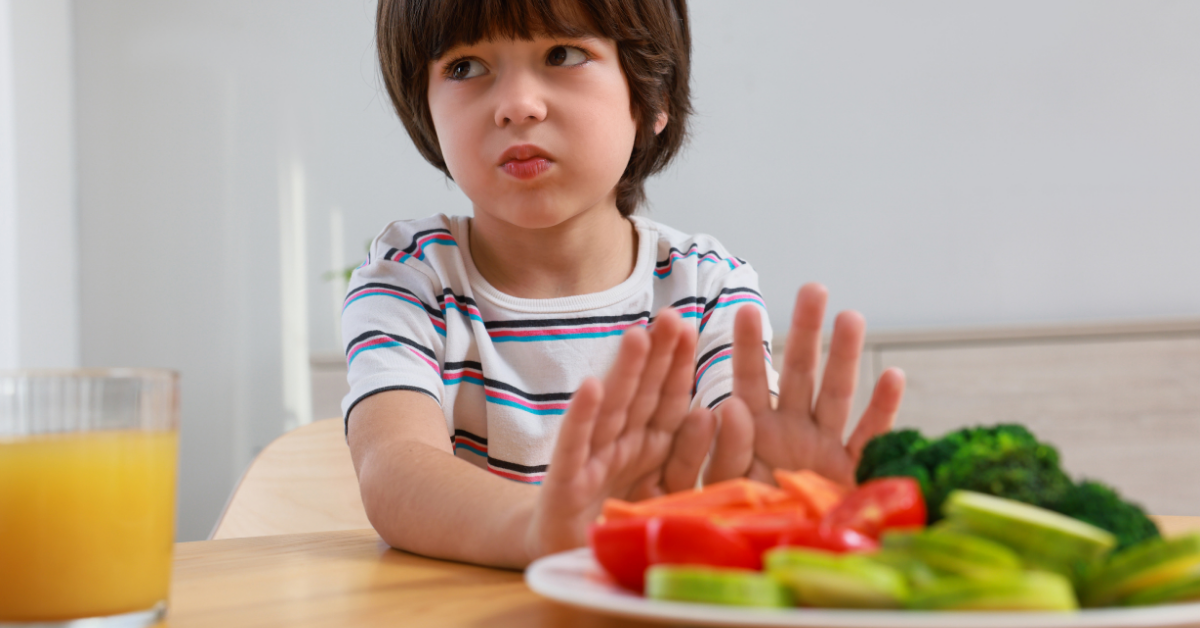
Put a small portion of the food on the plate alongside something familiar, and leave it there without comment. Skip the “just one bite” bargaining. Pressure tends to backfire and can make a child dig in harder.
2. Divide the Jobs
One of the most helpful approaches is to split responsibility at the table:
- You decide what food is served, when, and where.
- Your child decides whether to eat it and how much.
This takes the power struggle out of mealtime. You’re responsible for offering healthy choices, and your child is responsible for listening to their own hunger.
3. Let Them Help
Kids are far more likely to try food they had a hand in making. Even small jobs count:
- Washing vegetables
- Stirring batter or sauce
- Tearing lettuce
- Picking out a fruit or vegetable at the grocery store
- Arranging food on their own plate
A child who “made” the salad is much more curious about eating it.
4. Make Food Fun, Not Fancy
You don’t need to carve vegetables into elaborate animals. Small touches are enough:
- Offer dips like hummus, yogurt, or a little ranch
- Cut food into fun shapes or use toothpicks (supervised)
- Serve “build your own” meals like tacos, mini pizzas, or bowls
- Give foods silly names, like “tiny trees” for broccoli
Letting children choose between two healthy options (“Carrots or cucumbers tonight?”) also gives them a sense of control.
5. Eat Together and Set the Example
Preschoolers copy what they see. If they watch you enjoying vegetables, they’re more likely to follow. Eating together as a family, even a few times a week, helps make healthy food feel normal.
Keep the mood relaxed. Turn off the TV, put away screens, and talk about the day rather than what’s left on the plate.
6. Watch the Snacks and Drinks
If your child skips dinner, check what happens in the hours before. Frequent snacking, or lots of milk or juice, can fill small stomachs. Try offering meals and snacks at consistent times, about two to three hours apart, with water between them. A child who arrives at the table genuinely hungry is more open to eating.

7. Avoid Food as Reward or Punishment
Promising dessert for finishing vegetables teaches kids that vegetables are the “bad” part of the meal and sweets are the prize. Try serving a small portion of dessert with the meal occasionally, or skip the dessert deal altogether. The goal is a neutral, calm relationship with food.
8. Be Patient with the Process
Progress with picky eating is usually slow. Celebrate small wins, like touching, smelling, or licking a new food, without making a big fuss. These are all steps toward eventually eating it.
When to Talk to Your Pediatrician
Picky eating is normal, but check in with your child’s doctor if you notice:
- Weight loss or poor growth
- A very limited diet of only a handful of foods
- Gagging, choking, or trouble chewing or swallowing
- Extreme distress around mealtimes
- Signs of nutrient deficiency, such as unusual tiredness or paleness
Your pediatrician can rule out medical causes and refer you to a feeding specialist if needed.
The Bottom Line
Mealtimes work best when they’re calm, consistent, and low-pressure. Keep offering a variety of healthy foods, involve your child, lead by example, and trust that their tastes will broaden over time. You’re not trying to win tonight’s dinner. You’re building a healthy relationship with food that will last for years.
And, when all else fails, maybe just put this song on their tablet! Hehe: